At Metalic Techno Forge (MTF), we are passionate about creating components that don’t just meet industry standards but exceed them. Our expertise lies in custom metal forging and precision machining, two processes that are fundamental in delivering high-quality parts used across various sectors like automotive, defense, hydraulics, and construction. We aim to be the partner of choice for OEMs and Tier-1 suppliers worldwide by offering robust, reliable, and precision-engineered components designed for demanding applications.
Founded in 2014, MTF has grown into a trusted name in the forging industry, known for its commitment to quality, precision, and customer satisfaction. With over 250 skilled professionals and state-of-the-art facilities, we have the capacity and capability to serve industries globally, exporting 40% of our products to international markets. Our IATF 16949 certification ensures that we deliver products that meet the highest quality standards, particularly in the automotive sector.
Unleashing Strength and Precision: The Power of Forging
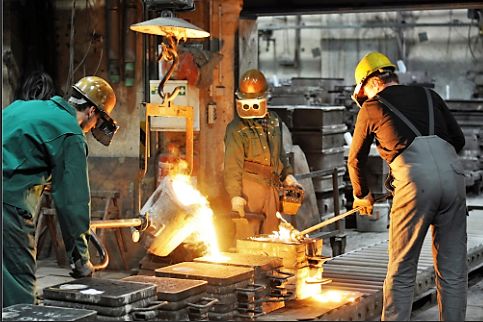
At the heart of MTF’s operations is the art of forging, a process that turns raw metal into strong, durable, and precise components. Forging involves shaping metal through the application of high pressure, either hot or cold, to create components with enhanced strength and uniformity. Unlike casting, where molten metal is poured into molds, forging works the material to improve its internal grain structure, resulting in a part that is significantly stronger and more resistant to fatigue. The power of forging lies in its ability to create components that perform exceptionally well under extreme stress.
In industries like automotive and defense, where safety and performance are non-negotiable, the need for high-strength components is critical. Whether it’s an automotive axle, hydraulic cylinder, or valve body, our forged parts offer unmatched durability. The metal’s grain structure, aligned in the direction of the force applied, makes it much tougher and more resilient compared to cast parts.
The Power of Forging vs. Casting: Why Forging Triumphs
What is the difference between casting and forging?
This is a common question we receive, and it’s essential to understand how these processes compare when choosing the best manufacturing method for your components.
-
- Casting involves pouring molten metal into a mold, where it cools and hardens into the desired shape. While this method is suitable for creating complex shapes and is more cost-effective for low-volume production, it has its drawbacks.
Cast parts tend to have a rougher texture and may be more susceptible to defects such as porosity or air pockets. These imperfections can compromise the strength and performance of the component, making casting less suitable for high-stress applications.
-
- Forging, on the other hand, shapes the metal using mechanical force, either through hammering or pressing. This process improves the metal’s internal structure, making it stronger and more resilient.
Forged parts are known for their superior mechanical properties, including increased tensile strength, higher fatigue resistance, and better overall durability. These attributes make forged parts ideal for industries where performance, safety, and reliability are paramount.
So, why is forging stronger than casting?
The key difference lies in how the grain structure of the metal is altered. In casting, the metal cools and solidifies in a mold, which can cause the grain to be uneven, leaving the component more prone to stress and failure.
Forging, however, compresses the metal, aligning its grain structure, making the final product denser and more uniform. This makes forging the preferred method when it comes to parts that need to endure heavy loads and repetitive stress, such as those found in automotive drivetrains, military equipment, or industrial machinery.
Precision and Strength: How We Forge Your Success
At Metalic Techno Forge, precision is at the core of everything we do. Our precision machining process complements our forging techniques, ensuring that the components we create meet exact specifications. After the metal is forged into its rough shape, we use advanced CNC machines to fine-tune the part, ensuring it fits perfectly and functions optimally in its intended application.
From turning and milling to drilling and grinding, our machining capabilities allow us to create parts with tight tolerances and flawless finishes. Whether it’s for automotive components, hydraulic systems, or industrial applications, we ensure that every part is crafted with the highest level of accuracy. This combination of forging and machining provides our clients with robust, reliable components that can withstand the test of time.
Our commitment to quality doesn’t stop at the manufacturing process. We invest in rigorous quality control at every stage, from material selection and forging to machining and finishing. Each part undergoes a series of inspections to ensure it meets the required standards for dimensional accuracy, strength, and durability. Only after passing these tests do we ship our products to customers, confident that they are receiving the best possible components.
Why Forging is Stronger Than Casting: The Secret Behind Superior Components
One of the most significant advantages of forging over casting is the material’s strength. Forging improves the internal structure of the metal, resulting in a part that is much stronger and more resistant to wear and tear. This is particularly important in applications where the component will be subjected to heavy loads, vibrations, and high temperatures.
For example, in the automotive industry, where safety is a top priority, forged parts are often used for critical components like axles, crankshafts, and connecting rods. These parts must endure high levels of stress and pressure, and forging ensures that they can perform reliably under these conditions.
In contrast, cast parts, while cost-effective for certain applications, are more likely to crack or fail under similar stress due to their inherent weaknesses.
Another advantage of forging is its ability to create parts with superior fatigue resistance. Components like gears, shafts, and fasteners need to perform reliably over millions of cycles without failure. Forged parts, due to their improved grain structure, are less likely to fail prematurely, making them ideal for these high-performance applications.
What Makes Forging Better Than Casting?
Why is forging better than casting? The primary reason lies in the material properties and the overall strength of forged components. Forging improves the internal structure of the metal by compressing the material, which aligns the grain flow and creates a denser, more uniform part. This results in greater tensile strength, better fatigue resistance, and superior performance under extreme conditions.
Cast iron, for instance, cannot be forged because it is brittle and lacks the malleability required for the forging process. The process of forging works only with materials that can be deformed, such as steel and aluminum, which allows them to be shaped into high-strength components.
The Mark of Quality: Identifying Forging vs. Casting
Understanding how to identify casting and forging is essential when evaluating parts. There are several ways to distinguish between these two manufacturing methods:
-
- Surface Finish: Forged parts typically have a smoother, more uniform surface compared to cast parts. Cast parts may have visible imperfections or rough textures due to the mold and cooling process.
-
- Strength and Durability: Forged components are significantly stronger and more durable than cast parts due to the alignment of the grain structure during the forging process.
-
- Weight: Forged parts tend to be denser and heavier than cast parts of the same size, which reflects their superior strength.
At Metalic Techno Forge, we ensure that each part is meticulously crafted, with every detail checked for accuracy and strength. Whether you need a custom forged component or a high-performance part for a demanding application, we deliver products that you can rely on.
Custom Forged Solutions for Every Industry
At MTF, we provide custom metal forging solutions tailored to the specific needs of our clients. From automotive components to hydraulic fittings and industrial parts, we can design and manufacture forged components that meet the exact specifications required for your project.
We work closely with each client to understand their needs and provide customized solutions that are not only cost-effective but also optimized for performance. Whether you need small batches of highly specialized parts or large-volume production runs, we have the capability and expertise to deliver high-quality, reliable components every time.
Working with Metalic Techno Forge: A Partner You Can Rely On
At Metalic Techno Forge, we believe that building strong relationships with our clients is as important as building strong components. Our clients trust us for our commitment to quality, precision, and reliability. By choosing MTF, you are partnering with a company that understands the intricacies of casting and forging and can deliver solutions that meet the highest standards of performance and durability.
Whether you’re in the automotive, defense, or industrial sectors, MTF is here to provide you with the best forged components that ensure the success of your projects. With our combination of forging expertise, advanced machinery, and a customer-focused approach, we are ready to help you meet your manufacturing needs with efficiency and reliability.